Showing posts with label POPULATION. Show all posts

Sunday, May 31, 2009

PRACTICE DUA FOR DAILY LIFE FROM QURAN AND SUNNAH

Remembrance of Allah in all Conditions


Allah Almighty says in the Qur'an:
"When my servants ask you concerning me, (tell them) I am indeed close (to them). I listen to the prayer of every suppliant when he calls on me." [2:186]

The place of duaa is so high to Allah, that the Prophet had said:
"Nothing is more honourable to Allah the Most High than du`a."

[Sahih al-Jami` no.5268]. He also said: "The most excellent worship is du`a."
[Sahih Al-Jami` no. 1133]; "If one does not ask Allah, He will get angry with him."
[Sahih al-Jami` no.2414]
===================================================================================
Why our Du'as are not answered
by ibn Rajab al Hanbali
from Khushu' fis-salah

Ibrahim ibn Adham - may Allah have mercy on
him - a third century scholar, a teacher and a
companion of Sufyan ath-Thawri, was asked
about the saying of Allah - the Most High:

"and your Lord says: "Call on me I will answer
your prayer..."
[40:60]

"We supplicate and we are not answered."
So he said to them:

You know Allah,
Yet you do not obey Him,

You recite the Qur'an,
Yet do not act according to it,

You know Shaitan,
Yet you have agreed with him,

You proclaim that you love Muhammad
Yet you abandon his Sunnah,

You proclaim your love for Paradise,
Yet you do not act to gain it,

You proclaim your fear the Fire,
Yet you do not prevent yourselves from sins,

You say "Indeed death is true",
Yet you have not prepared for it,

You point out the faults with others,
Yet you do not look at your faults,

You eat of that which Allah has provided for you,
Yet you do not thank Him,

You bury your dead,
Yet you do not take a lesson from it."
=====================================================

Duas for Health

and
Well-being


"رَبَّهُ أَنِّي مَسَّنِيَ الضُّرُّ وَأَنتَ أَرْحَمُ الرَّاحِمِينَ "

Rabbu inni massani-yadh-urru wa 'anta arhamur-Raahimeen
O my Rubb, Surely, distress has touched me, and You are the most Merciful of the merciful ones.
[surah al-Anbiya; 21:83]
- what Prophet Ayyub (alayhis salam) recited
=====================================

For Distress and Anguish
(Happpiness & peace)


Allahumma inni 'abduka, ibnu 'abdika, ibnu amatika, naasiyati biyadika, maadhin fiyya hukumuka, 'adhlun fiyya qadha'uka asaluka bi kulli ismin huwa laka, sammaita bihi nafsaka, aw an-zaltahu fi kitabika, aw 'allamtahu ahadan min khalqika, awista'tharta bihi fi 'ilmil-ghaibi 'indaka, an taj'alal-Qur'ana Rabbi'a qalbi, wa nura sadri, wa jalaa'a huzni, wa dhahaba hammi
Oh Allah, I am Your servant, the son of Your servant, the son of your maid-servant, and entirely at Your service. You hold me by my forelock. Your Decree is what controls me, and Your Commands to me are just. I beseech You by every one of Your Names, those which You use to refer to Yourself, or have revealed in Your Book, or have taught to any one of Your creation, or have chosen to keep hidden with You in the Unseen, to make the Qur’an Al-Karim the springtime of my heart, the light of my eyes, the departure of my grief, and the vanishing of my affliction and my sorrow.
[Ahmad 1:391, ibn Hibban]
The Prophet (salAllahu alayhi wasalam) said, there is no-one who is afflicted by distress and grief, and says (the above), but Allah will take away his distress and grief, and replace it with joy." He was asked: "O Messenger of Allah, should we learn this?" He said: "Of course; everyone who hears it should learn it
============================================

حَسْبُنَا اللَّهُ وَ نِعْمَ الْوَكِيلُ
hasbunal-lahu wa ni'mal wakeel
Allah is sufficient for us and the Best of those on whom to depend
[sahih al Bukhari 5:172]
When frightened or meet an adversary or powerful ruler
==================================================
Dua While Visiting
the Sick People
لا بَأسَ طَهُورٌ إِنْ شَاءَ اللّهُ
La ba'sa tahuroon insha'Allah
(Do not worry, it will be a purification (for you), God Willing)
[Sahih al-Bukhari, cf. Al-Asqalani - Fath al-Bari 10/118]
===============================================


Friday, May 29, 2009

EVERY MUSLIM SHOULD FOLLOW THE HADITHS SUNNAH IN THEIR DAILY LIFE

SUNNAH

EVERY MUSLIM SHOULD FOLLOW

THE HADITHS SUNNAH IN THEIR DAILY LIFE


Sunnahs On AWAKENING:
On AWAKENING rub face and eyes with the palms of hands in order to remove the effects of sleep.
When the eyes open in the morning say "Alhamdulillah" thrice and then recite Kalimah-e-Tayyibah.
Thereafter recite DUA on AWAKENING.
On AWAKENING cleanse the mouth with a meswak.

    ====================================================
MISWAAK UPON ENTERING HOME
"Shuraih (R) narrates that he asked Aisha (R): 'What was the first thing Rasulullah (Sallallahu Alayhi Wasallam) did upon entering the house?' Aisha (R) replied: 'Rasulullah (Sallallahu Alayhi Wasallam) would use the Miswaak'." (MUSLIM)

Times when usage of Miswaak is Sunnah:

1. For the recitation of the Qur'an.
2. For the recitation of Hadith.
3. When the mouth emits and odor.
4. For the learning or teaching of virtues of Islaam.
5. For making Dhikrullah (Remebrance of Allah, meditation).
6. After entering ones home.
7. Before entering any good gathering.
8. When experiencing pangs of hunger and thirst.
9. After the signs of death are evident.
10. At the time of Sehri.
11. Before meals.
12. Before undertaking a journey.
13. On returning from a journey.
14. Before sleeping.
15. Upon awakening.
Miswaak Quick View of Benefits: Advantages of Miswaak:

1. Miswaak strengthens the gums and prevents tooth decay.
2. Miswaak assists in eliminating toothaches and prevents further increase of decay which has already set in.
3. Miswaak creates a fragrance in the mouth.
4. Miswaak is a cure for illness.
5. Miswaak eliminates bad odors and improves the sense of taste.
6. Miswaak sharpens the memory.
7. Miswaak is a cure for headaches.
8. Miswaak creates lustre (noor) on the face of the one who continually uses it.
9. Miswaak causes the teeth to glow.
10. Miswaak strengthens the eyesight.
11. Miswaak assists in digestion.
12. Miswaak clears the voice.
13. The greatest benefit of using miswaak is gaining the pleasure of Allah.
14. The reward of Salaah (Prayers) is multiplied 70 times if Miswaak was used before it.


============================================

Sunnahs when wearing CLOTHES:
RasoolAllah (SalallahuAlaihiWaSallam) loved white clothing.
When putting on any garment RasoolAllah(SalallahuAlaihiWaSallam) always began with the right limb.
When removing any garment RasoolAllah(SalallahuAlaihiWaSallam) always removed the left limb first.
Males must wear the clothes above the ankles and females must ensure that their lower garments cover their ankles.
Males should wear a topi or turban and females must wear scarves at all times.
When wearing shoes first wear the right shoe then left and while removing first remove left and then right.
===========================================
    Play like the Prophet (PBUH)
    The Prophet (PBUH) understood the importance of fun and games. He would race with his wife Aisha who used to beat him most of the time, may God be pleased with her. He would swim and wrestle with his Companions. He would joke with them too. He played with and loved children. Muslims mustn’t forget this aspect of his life. Race with your spouse in your backyard; set up a swimming pool for the kids; Give your children time and smiles.
    ===============================================
Sunnahs about EATING :
Wash both hands before EATING.
Before EATING spread out a cloth on the floor first.
Remove the shoes before EATING.
Sit on the floor and EAT.
Recite "Bismillah wa`la Barakatillah" aloud.
EAT with the right hand.
EAT with three fingers if possible.
One should not EAT very hot food/do not BLOW on food.
EAT from the side which is front of you.
If a morsel of food falls down pick it up, clean it and EAT it.
Do not lean while EATING.
Do not find fault with the food.
Either sit on both knees on the ground or one knee raised or both knees raised while EATING.
After EATING one should lick his fingers.
Recite DUA after EATING.
First remove the food then get up.
Clean the plate and other utensils thoroughly after EATING.
By doing this the utensils make DUA for one` s forgiveness.
After meals wash both the hands, thereafter gargle the mouth.
While EATING shouldn`t remain completely silent.
cleanse the mouth with a meswak.
=================================================
Sunnahs about DRINKING:
A Muslim should DRINK with right hand because SHAITAN (satan) drinks with left hand.
Sit and DRINK.
Recite "Bismillah" before DRINKING and say "Alhamdulillah" after DRINKING.
DRINK in three breaths and remove utensil from mouth after each sip.
Do not DRINK directly from the jug or bottle one should pour the content into the glass first and have a look at water and then DRINK.

தண்ணீர் குடிப்பதால்


12/16/2009 4:16:39 PM
தண்ணீர் குடிக்கும் போது உட்கார்ந்து குடிக்க வேண்டும். ஏனென்றால் நின்று கொண்டு தண்ணீரை குடிக்கும் போது தண்ணீர் வயிற்றிற்கு அதி வேகமாக செல்லும். அதனால் ஹெர்னியா ஏற்படும்.


தண்ணீர் அதிகமாக குடித்தால் முகப் பருக்கள் நீங்கும்; முகம் பளபளக்க செய்யும்.


தண்ணீர் குடிக்கும் போது குடிக்கும் பாத்திரத்தில் மூச்சு விடக்கூடாது. ஏனெனில் நாம் மூச்சு விடும் போது வெளியாகும் கிருமிகள் அந்த தண்ணீரில் சேர்ந்துவிடுகிறது. அதனை குடிக்கும் போது நோய் ஏற்படுகிறது.


தினமும் காலையில் வெறுவயிற்றுடன் தண்ணீர் குடிப்பதால் சர்க்கரை நோயை கட்டுப்பதுத்தலாம்.


----------
தண்ணீர் குடித்தால் காது வலி வருமா ?


கடந்த சில ஆண்டுகளாக, வெள்ளக்காடாகச் சூழ்ந்து விடுகின்ற மழைத்தண்ணீர் சலிப்பை உண்டாக்கியிருந்தாலும், உடல் ஆரோக்கியத்திற்குத் தண்ணீர் அன்றாடம் இரண்டு லிட்டர் குடிக்க வேண்டும் என்பது அவசியம். அதைப் பருகும் விதம் எப்படி என்பது இதோ இங்கே கூறப்படுவது சரிதானோ என்று யோசிக்க வைக்கின்றது.

டம்ளர் கணக்கில் தண்ணீர் குடியுங்கள் என்று கூறப்படுகிறது. எப்படிக் குடிக்க வேண்டும் ?


தண்ணீரை, டம்ளரில் நன்றாக வாய் வைத்துக் குடிக்க வேண்டும். அவசரமின்றி மெதுவாகக் குடிக்க வேண்டும். வாய் நிறைய தண்ணீரை வைத்திருந்து கொஞ்சம், கொஞ்சமாக வயிற்றுக்குள் இறக்குதல் வேண்டும். அப்பொழுது எச்சிலுடன் குதப்பி தண்ணீரை வயிற்றில் இறக்குவது உண்ட உணவு ஜீரணிக்கும்.

டம்ளரில் வாய்வைத்துக் குடித்தால், காதில் வருகிற நோய்கள் தள்ளிப் போகும். தண்ணீரைத் தலை அண்ணாந்திச் சாப்பிடுவது காது நோய்களுக்கு வழிவகுக்கும்.

தண்ணீரை அண்ணாத்திக் குடித்தததால் ஏற்பட்ட பாதிப்பால் சிலருக்கு விரைந்து காது நோய்கள் தோன்றுகின்றன. நமது உடம்பில் காது,மூக்கு,தொண்டை வழிகள் ஒரே பாதையில் அடுத்தடுத்து உள்ளன. ஒருபோதும் தண்ணீரை அண்ணாத்திக் குடிக்க வேண்டாம்.
==============================================
BEFORE SLEEPING
Rasulullah SallAllahu alaihi wasallam also instructed Ali RadhiAllahu anhu to perform five acts every night before going to bed.

1. Give 4,000 dinaar, gold coins, as Sadaqah

2. Read the Qur’an Shareef once.

3. Pay the price of Jannah.

4. Reconcile two fighting persons.

5. Perform Hajj.

Ali RadhiAllahu anhu said: Ya Rasulullah SallAllahu alaihi wasallam, this is difficult for me. I will not be able to do that. Whereupon Rasulullah SallAllahu alaihi wasallam replied:

1. Recite Surah Fatiha 4 times and the reward for giving 4,000 dinaar will be recorded in your Book of Deeds.

2. Recite Surah Ikhlas 3 times, and this will be equal to the reward of reciting one Qur’an Shareef.

3. Recite Durood Shareef 3 times, and this will be the reward of paying the price of Jannah.

4. Recite Astaghfirullah 10 times and you will receive the reward of reconciling two fighting persons.

5. Recite the third Kalimah 4 times to receive the reward of performing one Hajj.

On hearing this Ali RadhiAllahu anhu said, Insha’Allah I will perform these acts every day before going to bed.
==================================================
Sunnahs about SLEEPING:
Pertaining to DEEN before going to sleep discuss matters of family members or (read some Islamic books or narrate some incidents of sahabah).
To sleep in the state of WUZU (Ablution).
To make the bed yourself.
Dust the bed thrice before retiring to bed.
One should change some other clothes before going to sleep. (Ex:-Pyjamas, etc).
To brush the teeth with a meswak.
To apply surmah in both the eyes.
One should sleep immediately after ISHA salaah.
To sleep on the right hand side keeping right palm under the right cheek.
To keep the knees slightly bent when sleeping.
To refrain from sleeping on one`s stomach.
Sleeping both on bed and floor are sunnah.
To face Qiblah.
To recite Surah Mulk before sleeping.
To recite Aayat-Al-kursi.
To recite Surah Iqlaas, Surah Falaq and Surah Naas three times before sleeping thereafter blowing over the entire body thrice.
Recite Tasbeeh-e-Fatima before sleeping i.e 33 X Subhan`Allah, 33X Alhamdulillah and 34 X Allahu`Akber.
To recite the DUA before sleeping.
To wake up for Tahajjud salaah.
=====================================
Istinjaa - Bathroom Etiquette

Istinjaa: to remove the dirt, Najasah (impure substances) or lessen them after urinating. Wajib (compulsory), according to the prophet's Hadiths mentioned below.
The tools used for Istinjaa
Are either pure water, and this is the origin of all purification from Najasah, and all solid materials that can remove the dirt, like stones or paper tissues.
It is better to use BOTH (water & solid materials), but if only one is available then the priority is given to water.  If water is not available, then we use the solid material, under the following conditions: It must be dry material (not moisture), it must be used to remove the Najasah or dirt before it gets dry, the Najasah should not have touched other parts rather than the related organs, and the pieces should not be less than three pieces of the solid material being used, or more when needed, and one better make it in odd numbers (Witr): 3, 5, 7 ...etc.
"No one shall make "Estinjaa" without using three stones" (Muslim: 2622)
 

Materials not to be used for Istinjaa
1- We (obviously) should not use anything that is originally Najis (impure)..
The prophet SAAWS asked his servant (Abdullah Ibn Masood) to bring him three stones for "Estinja", Ibn Masood RAA only found two stones so he brought him a piece of animal's droppings (dung) that was dry.  When the prophet saw it, he threw it away and said that it is Najasah (impure). (Bukhary: 155)
2- We can not use any human's food for this purpose, neither we can use a Jinn's food (like bones) for "Estinja"
"Do not use bones for "Estinja"; they are the food for your Jinn brothers" (Muslim: 450) and (Tirmidhy: 18)
3- It is forbidden to use any of the animals parts, like it's hand or legs ...etc.  But if this part was pure and separate from a dead animal, like the skin that is tanned, it can be used.
 

Rules with regards to the place
It is forbidden to do urinating or "Estinjaa" in the following places:
1- Places were people sit, gather or pass by, as this would cause hurt to others.
"The prophet SAAWS said: avoid the two cursed things.  They said: and what are the two cursed things?  He SAAWS said: whoever urinate in the roads people pass by, and under the shadows where they rest"  (Muslim: 269) and others.
2- In a hole in the ground or a hole in the wall, as it might cause him hurt that it might be a shelter for snakes or scorpions, or he might hurt other weak animals.
"The prophet SAAWS forbade us from urinating in burrows (hole in the ground)" (Abu Dawood: 29)
3- Under trees that have (or might have) fruits; as a protection for the fruits from dirt.
4- Shallow water (or water that is not running). (Muslim: 281)
 

Rules concerning the person himself
1- It is not allowed to carry anything that has Allah's name (or any of His holy names) with him to where he is urinating..  As this is considered to be a Najis (impure) place that is not appropriate to carry or mention Allah's name(s).
Also when a Muslim passed by the prophet SAAWS while he was in the Khala, he said the greeting (Salam) to the prophet, but he SAAWS did not answer his greeting.
2- He/she should enter "Al khala" or the bathroom with his/her left leg and say: "Allahomma Inny A'ootho Bika Mina 'l 'khobothi Wa 'l 'khaba'ith"   or: "O' Allah: I seek refuge in you from male and female noxious beings (devils or evil Jinn)"
He/she should go out with his/her right leg and say: "Ghof'ranak" or "O' Allah: I seek your forgiveness".  Also the prophet SAAWS used to say when going out: "Alhamdu Lillah, Allathy Afany Wa Akhraja Al Atha Minny"  or: "All grace to Allah (thanks to Allah) who protected (cured) me, and relieved me from filth/harm"
*I personally believe the last Dua'a is so important, as it is a big grace to be able to get relieved from the filth or harm..  we only feel it when we are sick!  so I guess it's so appropriate to thank Allah for this grace.
3- One should not talk.  It is not appropriate for a Muslim while urinating to talk or discuss matters.  Many scholars said it is "dislike" or "Makrooh".
4- One should move and hide himself from others, as the prophet SAAWS only relieved himself when he was out of site.
5- One should neither face nor turn his back to the "Qibla" while relieving himself. *This is actually what Islamic Housing designs should consider when building the bathrooms or toilets.
6- One should use his left hand for the cleaning after urinating "Estinjaa", as it is more appropriate.  It is Makrooh to use his right hand for this purpose or to touch his private parts with it.
"Salman was once asked: Your prophet teaches you everything, even how to relieve yourselves?
Salman said: Certainly.... he forbade us from facing the Qiblah while doing so, from cleaning ourselves with our right hand, and from cleaning ourselves with less than three stones.  We also should not use an impure substance or a bone to clean our selves" (Muslim, Abu Dawood and At-Tirmidhy)


Standing and Urinating in Islam>>>


Wednesday, May 20, 2009

THE IMPORTANCE OF CONSTRUCTING MASJID IN ISLAM


When Prophet Mohammed (PBUH)
arrived in Madinah,
the first act he performed was
the building of a Masjid.


From the events of the emigration to Madinah, it is clear that the Prophet Mohammed (PBUH) never stayed in any place unless he built a Masjid therein for the believers to gather. He built the Qubaa Masjid when he stayed there for four days. He also built a Masjid between Qubaa and Madinah when the time of the Friday prayer came while he was in the residence of the tribe of Salimibn Auf in the heart of Ranonaa’ Valley.

When he arrived in Madinah, the first act he performed was the building of a Masjid.

This indicates the importance of a Masjids in Islam. All acts of worship (ibadah) in Islam are for the purification of the soul, refinement of morals, and strengthening the ties of mutual cooperation among the Muslims. The congregational prayers and the Friday and Eid prayers are strong examples of the nature of the Muslim community and in the unity of their opinions, goals and cooperation in achieving righteousness and in fearing Allah.

Thus, if this is the case with the acts of worship, it is no wonder that Masjids carry a great social and spiritual place in the lives of the Muslims. The Masjid is the thing which unites them and their efforts. It refines their souls and awakens their minds and hearts. It solves their problems. The Masjid shows their strength and cohesiveness.


Is it not true that Abu Bakr (RA), `Umar (RA), `Uthman (RA), Ali (RA), Khalid (RA), Saad (RA), Abu Ubaidah (RA), and their likes from among the greats of Islamic history were but the students of the Muhammad’s school which was headquartered in the Prophet’s Masjid ?

Another special characteristic of the Masjid in Islam is that the word of truth emanates from them every week on the tongues of the preachers. The topic may be about forbidding evil and enjoining good or an invitation to do some good, an awakening for the heedless, an invitation to assembly, objections to a wrongdoer, or a warning about a tyrant.

If we see the Masjids crippled and not playing their great role today, it is due to the fault of some of their paid preachers, mercenaries or the ignorant. On the day when the strong leaders and the scholars of Islamic legislation, sincere to Allah and His Messenger, give advice to the leaders and common Muslims and ascend the pulpits and lead the prayers, on that day the Masjid will return to its leading position in the Islamic society. The Masjid will return to its role in raising real men, graduating heroes, reforming corruption, fighting evil and building society upon the foundation of fearing and pleasing Allah alone. We hope for this to take place, Allah willing, when the vanguard of our purified, believing youths, who are educated with Allah’s religion and who behave with the Prophet’s Mohammed (PBUH) manners, occupy the pulpits and the rooms of the Masjids.                  


THE IMPORTANCE OF CONSTRUCTING  MASJID IN ISLAM


by HAZARTH K.A.NIZAMUDDEEN

LISTEN HERE


If you would be interested in Constructing New Masjids in India, Contact Us and we would guide you to the places where they are needed the most. We would also suggest you to take a look at our ‘Masjid Appeals‘ section wherein existing Masjids need your assistance in fulfilling their requirements.


contact Ayub 99622 10628 .....mtj313@msn.com


ONGOING MASJID PROJECTS

KINDLY VISIT 


Spend your wealth for the cause of Allah, and be not cast by your own hands to ruin; and do good. Lo! Allah loveth the beneficent....AL-QURAN 2:195.


பாதையில் செலவு செய்யுங்கள்; இன்னும் உங்கள் கைகளாலேயே உங்களை அழிவின் பக்கம் கொண்டு செல்லாதீர்கள்; இன்னும், நன்மை செய்யுங்கள்; நிச்சயமாக அல்லாஹ் முஹ்ஸின்களை -நன்மை செய்வோரை- நேசிக்கின்றான்....AL-QURAN 2:195.


If you would be interested in Constructing New Masjids in India,  and we would guide you to the places where they are needed the most. We would also suggest you to take a look at our ‘ section wherein existing Masjids need your assistance in fulfilling their requirements
               Contact    lmt313@msn.com

           Phone :  + 91 9962210628  Ayub


-----------------------------

         WHO CAN MANAGE THE MASJID ?


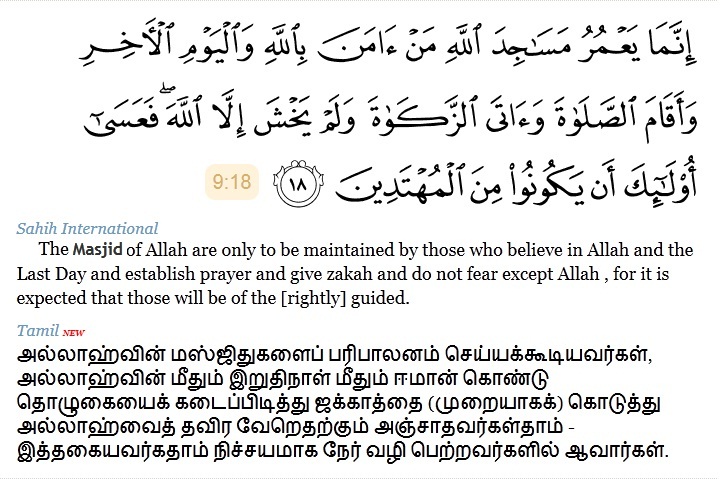
THE MASJID OF ALLAH ARE ONLY TO BE MAINTAINED BY THOSE WHO BELIEVE IN ALLAH AND THE LAST DAY AND ESTABLISH PRAYER AND GIVE ZAKAH AND DO NOT FEAR EXCEPT ALLAH,FOR IT IS EXPECTED THAT THOSE WILL BE OF THE (Rightly) GUIDED -

Surat At-Tawbah 9:18

அல்லாஹ்வின் மஸ்ஜிதுகளைப் பரிபாலனம் செய்யக்கூடியவர்கள், அல்லாஹ்வின் மீதும் இறுதிநாள் மீதும் ஈமான் கொண்டு தொழுகையைக் கடைப்பிடித்து ஜக்காத்தை (முறையாகக்) கொடுத்து அல்லாஹ்வைத் தவிர வேறெதற்கும் அஞ்சாதவர்கள்தாம் - இத்தகையவர்கதாம் நிச்சயமாக நேர் வழி பெற்றவர்களில் ஆவார்கள்.
Surat At-Tawbah 9:18


WHO CAN MANAGE THE MASJID ?

by HAZARTH K.A.NIZAMUDDEEN

LISTEN HERE


===============


WHAT IS QUALIFICATION FOR


IMAMTH AND MUEZZIN IN MASJID


By HAZARTH

K.A.NIZAMUDDEEN

LISTEN HERE


Sunday, May 17, 2009

WHICH BUSINESS MUSLIM CAN DO ?

WHICH BUSINESS IS 
HALAL IN ISLAM ?

WHICH BUSINESS IS 
HARAM  IN ISLAM ?

LISTEN HERE


------------------------------
CIGARETTE BUSINESS 
MUSLIM CAN DO ? 


-----------------------------------

Ketamine use 'can destroy bladder' say scientists 17 March 2012 Last updated at 09:41 GMT Help  

Get Adobe Flash player

The Class C drug ketamine can destroy the bladder, new research has shown.

Researchers at York University have been growing bladder tissue in a laboratory to study what happens to human cells when they are mixed with the drug, which is used as an animal tranquillizer.

Concerns about its increased recreational use, and the harm that ketamine can cause, have led the Home Office to order a review.

The BBC's Adele Robinson reports